
The Long Road to Equality
How the Canadian Federal Correctional Service is ushering in gender parity.

Listen to this post
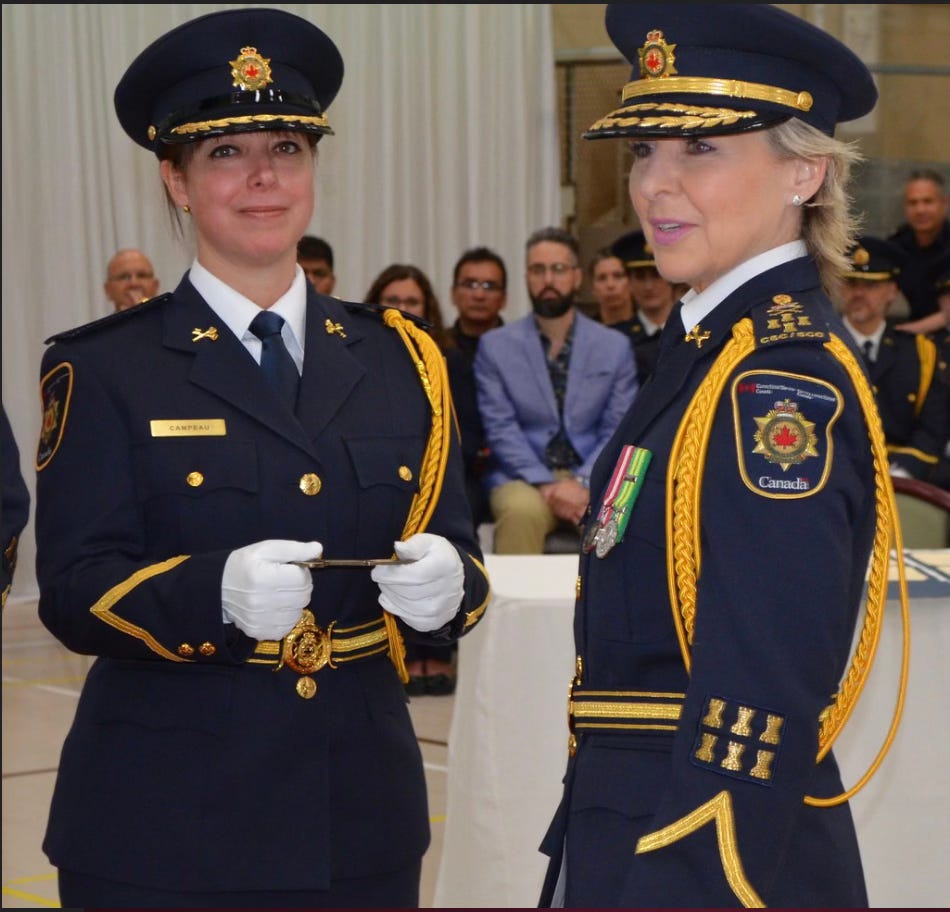
During the late 1980s and early 1990s, the Correctional Service of Canada began to allow women officers to work in male prisons.
But despite widespread efforts to increase equity, diversity, and inclusion in employment practices, the correctional officer occupation today remains dominated by men.
For correctional officers working in prisons, a show of masculine strength (both physical and psychological) is essential to successfully navigate the vulnerabilities they face in the job.
To better understand how masculinity is experienced when training for correctional work, researchers used a gendered lens in interviews with recruits.
“The academy space is complex regarding gender,“ write researchers in the journal Gender Issues. “Notions in which all recruits are socialized dominate and shape discourses, despite counter progressive efforts.”
From the interviews, researchers found that men are increasingly supportive and accepting of women in correctional services, if they are good recruits and make hard-working officers.
However, at the same time, some men revealed feeling emasculated when sharing their workplace with women.
The study also found that a belief prevails that males will be better at the job than females.
For example, one participant, Rickson, described an area in the basic training where he believes his women peers disproportionately do less well than his male colleagues:
Rickson: So, we have, um, a lot of female really good, really smart, educated girls coming through this program. But then, they get all hopped up, they get screwed with the firearms. Like they just, yeah. It’s, it’s just kinda crappy. Because it’s kind of like, they’re awesome at case work. They know case work already. They’re very smart, they’re very articulate, they’re very punctual, like they’re professionals, but they get stuck on one thing, that’s maybe not the best thing for them.
“Here Rickson provides a very gendered observation that is rooted in socialization processes and learned presumptions about femininities,” write the researchers.
“Further, his positioning of women as excelling at casework but struggling with firearms reinforces masculinities that are centered on physicality, strength, and their positioning as empowered.”
Nevertheless, the researchers concluded that there is room for optimism in terms of men’s acceptance and inclusion of women into what has historically been a male-dominated field.
“In listening to how recruits create the narrative of masculinities and reflect on their visions of equality and difference, we found little in terms of women experiencing sexism, but instead a culture that is stoic in nature and very much attuned to traits that are typically considered masculine.”
The full article can be downloaded here or requested through your school or library using this citation: Ricciardelli, R., Spencer, D.C. Federal Correctional Officers: Masculinities, Training, and Vulnerabilities. Gend. Issues 43, 14 (2026). https://doi.org/10.1007/s12147-025-09400-9
D.L. Lee is the author of SISTERLY LOVE, a novel about two sisters who grow apart.
You may also like:
How Geopolitics Controls Women’s Rights: Reproductive rights are framed as key to women’s empowerment, but their implementation is frequently dictated by political expediency over commitment to gender equity.
The Social Mobility Equation: How access to finance can play a significant role in enabling entrepreneurship for women.
Empowerment! How boards around the world are enhancing innovation through women leaders.
The Male Defender and the Female Victim: How we mobilize women to help fight wars while maintaining gender hierarchies in society.
" ...physicality, strength, and their positioning as empowered." Aye. I work as a veterinarian. Big cattle? A woman can't handle it. Really? We can. Brawn plus brain work well together.